

Symbolism. The art of connections and meaning. From silly connotations to more serious motifs analyzed through centuries of art and media, symbolism has been around forever. But what happens when we hone in on more specific groups of symbolic meaning? What about if we look beyond the objects, and examine its effects on societal expectations or emotions on a certain group? Today we will be looking through the different objects associated with female symbolism throughout time and the effects they have on women’s current perception in art, media, and society.
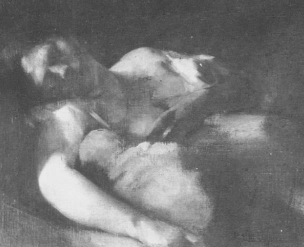
The basis of women’s symbolic portrayal is built upon the backbones of historical art and media. By examining our past the future becomes more clear. And so with that, there is no better place to start than with 19th century art. While most artists did branch out to hundreds of different themes including natural landscapes, political statements and mythology, many of the focal points revolved around women. Despite there being hardly any women painters in the mainstream at that time, male artists had no issues painting hundreds of artworks tied with often either negative or degrading connotations towards women, becoming the foundations of how we view and treat women today. Once this theme of art became popular, any paintings detailing a woman in power were heavily criticized and often not well known or appreciated in the art community. The norm was for female characters to represent one of three options, a pure virgin, a fertile mother, or a sexual attraction. Making this the norm and expectation of what women’s “use’s” were. Along with this art, poetry was also influential and many stories were written that women were only able to operate off of instinct and species while men have consciousness and reasoning, leading to individuality. It quickly forced all women into a small group whose only purpose is to reproduce. unintelligible, single minded beings who are all the same. Others wrote that the charm of women’s looks is nothing more than an evil and lustful threat. Though it may feel like these are just mere interpretations of old paintings, these pieces laid the groundwork for misogyny in the workplace and in society as a whole.
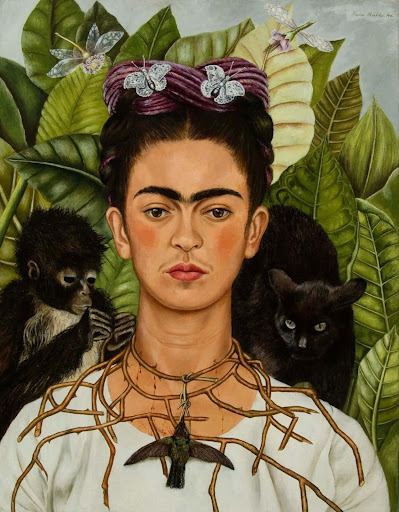
Necklace and Hummingbird. 1940.
Oil on canvas. 62.5 x 48 cm. Harry Ransom Center at University of Texas Austin
So what does it look like now? While there is tons of discourse on modern art (that’s a story for another time), it’s clear that 19th century art had such a huge impact on women’s rights. So then how does modern day art reflect our social climate? Luckily there is a high number of women in this field, meaning that female artists are painting for females, putting women in power and responsibility. Representing equal rights and the ongoing fight for equality, art has become a way to represent that challenge. Famous artists like Frida Kahlo showed defiance against the mainstream and stood up for women everywhere. Symbolism in the form of flowers for growth, mirrors for self reflection and birds for freedom began to make appearances, showing a silent stand. You have to look deeper for these meanings, they don’t jump out at you. That in and of itself is symbolic. Women showing their scars and their growths in private, or in a way that only thoughts who care will understand.
So beyond the roses and the mirrors? What else can you look for on your next trip to the art museum? Well, there’s thousands of symbols and almost everything that’s painted has a meaning but some of the most popular used in mainstream western feminist culture is the moon for cycles, the venus symbol for love, the lotus flower for purity, The earth for harvest, and orchids for strength. Outside of western culture, Egyptian culture believes lotus flowers represent birth while Hinduism believes lotus flowers represent fertility. The spiral goddess of power is a celtic symbol. Grandmother Spider is an Native American symbol for mother earth and the deity Umay is the Turkish god for women and children. Needless to say, women’s symbolism has existed in every culture across the span of all time, but that doesn’t mean every connotation is good. Most are tied to purity, fertility, love and passion. All the same things displayed in 19th century art, hmm how interesting.
In this next section I’ll be diving into some of the most famous and common symbols, both empowering and submissional, and their connotations across cultures.
Venus
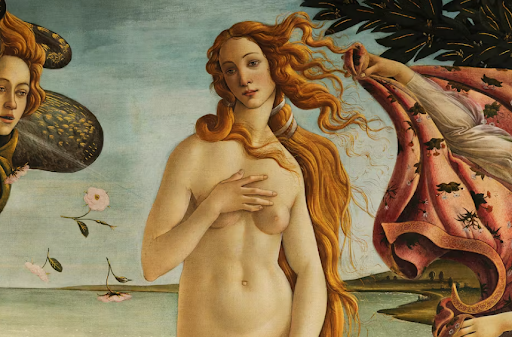
The venus symbol, one of the most iconic and well known symbols of women, rooted in the goddess Venus in Roman mythology or the goddess Aphrodite in Greek mythology. Rome often held Venus as a symbol of high status, using it on currency and sculpting busts of this powerful goddess, and yet women in ancient Rome were horribly mistreated. In Roman civilization, her symbol was placed in gardens as good luck for vegetation to grow, another example of women representing fertility. To get technical with the word, the etymology actually reveals a lot. Venus in Latin means love but occasionally it is instead translated to venenum, as in poison or charm. We’ve already discussed that female charm was seen as an evil sin. It’s interesting that the iconic symbol that represents women everywhere, is tied closely to venom. In terms of current day, the symbol goes farther than the sign on the bathroom. Things like Venus razors and movie titles all prove that Venus still has a huge presence in female symbolism.
Pearls
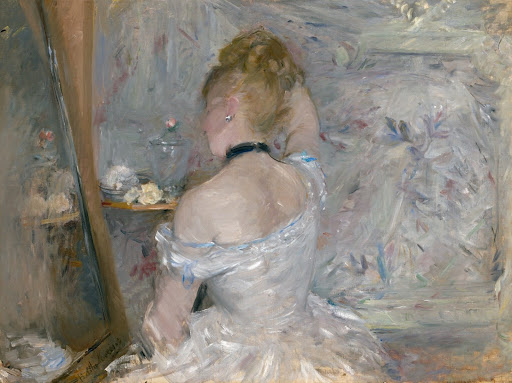
Pearls, the tiny gems of ocean magic found in oysters have strong ties to feminine symbolism. First found in China, Chinese culture believed they were a sign of fertility. To go along with that, many said Venus had strong ties to the gem, seeing that both the goddess and the pearl come from the ocean. In more western culture many believed it to be connected to the moon, based on their appearance. Currently pearls also represent wealth and status and that is commonly the way they are representing in art.
Sunflowers
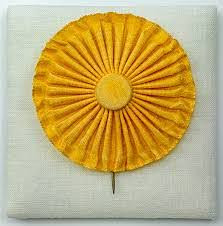
Now despite what seems like endless symbols of oppression and submission, there are some out there that represent women’s power and ability to stand up for their beliefs. The humble sunflower is a great example of this. Native to north and south Africa, the sunflowers found in the state of Kansas served as hope and resilience for women fighting in the suffragette. Women would wear sunflower pins to represent their support in the movement and later the color yellow was adopted nationwide. 50 years later Kansas was named “The Sunflower State”, showing the impact this movement had on the nation.
Pomegranates
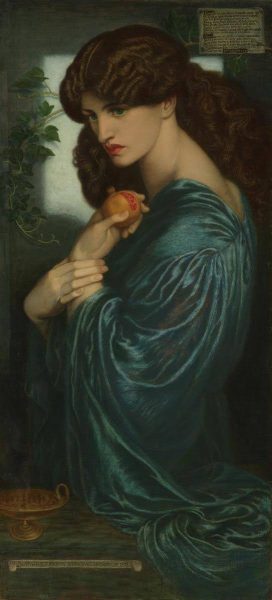
Pomegranates represent not only boldness in their blood like juices but also power and defiance. Pomegranates get their main symbolism from the Greek myth about Persephone and hades. Persephone, the daughter of Demeter, the harvest goddess, was abducted by Hades, god of the underworld. After being tricked into eating six pomegranate seeds she was tied to the underworld for six months of the year, thus creating the seasons. It’s important to remember in this story that Persephone was taken against her consent and forced to be Hades’ husband. Some paint this story in the light of love, but it’s everything but. None the less, despite the pomegranate possible representing captivity or trickery, it became a symbol of defiance and power as Persephone, now the queen of the underworld, gained agency and power.
The Moon
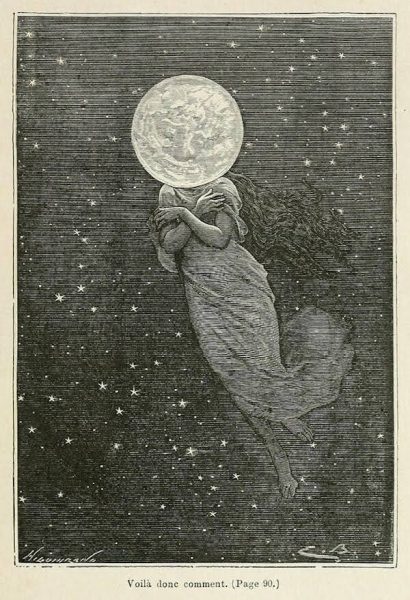
And finally, one of the most empowering symbols is the moon. This natural satellite has always represented the cycles of life, but more specifically The moon represents the menstrual cycle, as a moon cycle is 30 days and the menstrual cycle is too. Because of this link to menstruation it’s also linked to sleep and emotions. The moon has always had a connection to every culture but something that makes this connotation of the symbol so important is it allows women to reclaim their wonderful and natural intuition and instinct. Not as a way of saying it’s a women’s only trait or use, but to say that it’s what makes them powerful. The moon allows women to take control of their emotions and destigmatize their natural process of reproduction. The moon is female beauty and divinity and one of the most important and often overlooked symbols of them all. So the next time you’re looking at the moon, remember to thank her for having looked over you till this point and if you haven’t already, start to learn more about the way you feel with the moon rather than alongside it.
So there you are, this is nothing more than a scratch on the surface of female symbolism, nothing more than an introductory crash course. Whether you’re off to the museum, in a Greek or Roman history class right now, or you’re a girl just like me wanting to know more about the backbone of our societal impression, I hope you learned something and enjoyed it!
Works Cited
Apel, Thomas. “Venus.” Mythopedia, 2022, https://mythopedia.com/topics/venus/.
Braid, Fara, and Phoebe Shang. “Pearl Symbolism and Legends – International Gem Society.” International Gem Society IGS, 27 April 2025, https://www.gemsociety.org/article/history-legend-pearls-gems-yore/. Accessed 19 October 2025.
Brinkman, Monica. “Feminist Iconography: Art, Symbols, and Impact.” Feminist Art, https://www.feministart.ca/learn-more/feminist-iconography.
Grant, Indy. “Moon.” This is Gendered, 2023, https://thisisgendered.org/entry/moon/.
JFK Presidential library and Museum. “Suffrage Sunflower.” https://www.jfklibrary.org/sites/default/files/2020-05/Sunflower%20Instructions%20v3.pdf.
Myers, Anna. “A Guide To Feminine Symbols (With Meanings).” Dandy, 2022, https://www.dandy-wellness.com/blogs/soul-1/a-guide-to-feminine-symbols-with-meanings?srsltid=AfmBOopn6MJz56L817wJXKdfeDbahKkev4bM0tQucBMypkGhNq1pBIvY.
Rotava, Rafaela Nesello. “How Pomegranates Came to Symbolize Womanhood.” a Magazine, 2024, https://theamag.com/9622/culture/9622/.
Saini, Bhavya. “Moon as a Feminine Symbol.” ENROUTE Indian History, 2023, https://enrouteindianhistory.com/moon-as-a-feminine-symbol/.
Schubert, Gudrun. “Women and Symbolism: Imagery and Theory.” Oxford Art Journal, vol. 3, no. 1, 1980, pp. 29-34. JSTOR, https://www.jstor.org/stable/1360176?seq=1.