
Recently, the world has been rapt by the recent release of the Crave original series (HBO for us Americans) “Heated Rivalry.” The show has experienced huge success and, as of writing, stands at #2 on HBO’s leaderboard despite the season’s conclusion. It’s inescapable. What makes this important is that “Heated Rivalry” isn’t a typical chart-topping soapy drama, because it’s about gay people. In 2026, there are still so few queer TV shows (although quickly growing) that that’s a big enough distinction to make it its own subgenre. It’s not a romance, it’s a gay romance.
As the current most popular example in the genre, “Heated Rivalry” can serve as a jumping off point to examine it against its counterparts and their cultural influence. My goal here is to discuss the current state of queer TV, including “Heated Rivalry” and “Heartstopper,” evaluate the merit of these shows individually, and ask the question, “What about lesbians?”
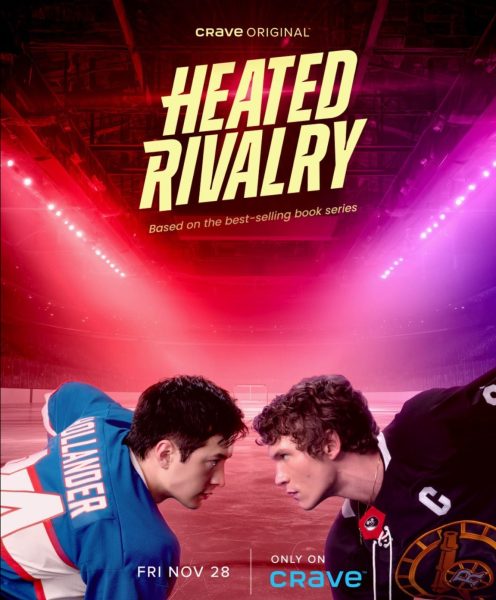
“Heated Rivalry” is about two rival hockey players who begin a decade-long secret affair. It just finished its first season with a run of 6 episodes, but before then, it was a book of the same name by Rachel Reid in the “Game Changers” series (put a pin in this). There’s a lot to say about this show. I wouldn’t call it a bad show by any means; there’s actually some interesting filmmaking decisions to be found within it. However, I think it struggles with pacing and it can be a bit confusing to keep the timeline straight. Aside from a more educated analysis, I have some subjective opinions. My one main issue with this show is what makes it perfect for so many others: it stays very true to its origins. I can’t speak to how this book was adapted because, well, I haven’t read it, but the show reeks of BookTok. For the unaware, BookTok is the side of TikTok that discusses books and BookTok sure does love a certain kind of book. Those of us outside the circle call it erotica, or would say most are just about a step away from being straight up porn, but BookTok calls it “spice.” The source material here was, as they say, spicy.
I’m not here to rain on the parade and say the entire genre is bad or you can’t enjoy that, but so much of the screentime here is taken up by rather graphic sex scenes. PSA: not sure why you would, but definitely don’t watch this with your parents.
* Side note: surprisingly, despite the amount of detailed and lengthy sex scenes, there is never any genitalia on screen; it is always carefully concealed by a well-placed leg or an askew camera angle. Maturity ratings and what’s allowed to be shown on TV are pretty complex, but it seems a strange place to draw a line. However, there is a lot of man ass in this show, the likes of which I haven’t seen since “Hotel Hell” (I’m serious, go watch “Hotel Hell”). Plus, one female ass for good measure.
Considering this is my essay, I feel the need to opine on what I subjectively didn’t like. It personally irks me every time any characters have sex instead of talking about something. Call me boring all you want, I think they should just talk to each other! Additionally, so much focus was placed on sex that I missed out on what makes them click as a couple. In romances, I love to look for how their lives are better together, what interests they share, how maybe one character notices something about the other that often goes unnoticed (i.e. Blackbeard notices Stede’s model ship and thinks it’s just so cute and novel while others made fun of him for it). Sure, they had snarky banter, but they were too busy fucking to show what they actually liked about each other. Seriously, what does Shane like about Ilya? Ilya doesn’t really become vulnerable with Shane until around episode five, so up until that point, Shane hardly knew enough about him to latch onto. Even then, trauma isn’t something to like about a person. In fact, this man is an asshole for 90% of the show, and that’s not just my opinion — it’s also Shane’s, which he regularly mentions. I get that it’s a cold exterior, I don’t think Ilya is a bad character, but if I had a friend who was wanting to continue a relationship with this Russian hockey playing jackass, even though it jeopardizes their careers, I would have some questions.
On another note, the ending of season one didn’t quite work for me. In my opinion, at least one of them had to come out before the end of season one, because, since the beginning, you have been waiting for the other shoe to drop. You know, as soon as the relationship starts, this is risky, and they better hope no one finds out — it’s Chekov’s closet. They did deliver here, but only halfway. Shane and Ilya are found out, but only by Shane’s parents. This is still a big deal, and by the end of season one, they’re discussing their future as a couple, but it’s not as much of a conflict or conclusion to the arc as more people knowing would have been. Personally, I’m still waiting for someone to connect the dots that “Lily” is just Ilya or “Jane” is just Shane — it would seem so obvious in hindsight, wouldn’t it?
To be publicly out as queer, Ilya has more to lose than Shane. Ilya speaks on being from Russia, which is famously hostile towards queer people. If he were to come out, he would likely not be able to come home again. But then, his father dies, and he cuts ties with his brother and verbalizes that he hates Moscow and doesn’t want to return. Boom, no more stakes. The only thing keeping him tied to Russia was his family, with whom he didn’t have a good relationship to begin with. It probably would have been better for him to just come out and cut all ties before all of this even happened. So now it’s just being worried about how people would react because you’re a famous hockey player— oh no, a second plane just hit the stakes. Unexpectedly, another player comes out about his queer identity and relationship, before Shane and Ilya are even officially dating, and we see no consequences for him. Really, things go pretty well for him. He did the brave thing by being the first openly gay hockey player, not our protagonists, and proved to the actual main characters that it’s not only possible, but rewarding. So what the fuck are they so worried about? In real life this would be a different story, but as far as we see in the show, the other players are largely very friendly and don’t espouse any homophobia or toxic masculinity often inherent in sports. I don’t mean to diminish the difficulty of coming out, but I have no idea of any devastating consequences that would happen if the public knew about their relationship.
Now, about that other hockey player. “Heated Rivalry” actually makes a very unexpected decision halfway through the season. Episode three focuses entirely on two characters that are not Shane and Ilya, and frankly, they don’t have much to do with either of our protagonists. The spotlight is on Scott, another hockey player who is also gay. This episode follows him meeting Kip, who works at a smoothie shop, and their love story. Scott struggles to deal with this new relationship, afraid to come out for the sake of his career. The entire episode is an hour long love story that takes you from start to finish, separate from our main characters. He’s the one who comes out first. You see Scott and Kip meet, do the awkward “does he like me?” song and dance, and fall in love by the end. That’s to say, it’s not really a speedy recap. In most cases, deciding halfway through your story that you want to tell a different one would derail your show, and here, while it does throw things off balance, it didn’t ruin things. At first, I thought: “Who are these people? Why do I care?” But by the end of it, dammit, I missed Kip and Scott. They actually talked to each other! They communicated, they bought each other gifts, they had little inside jokes, and they were honest! I was disappointed to return to Ilya and Shane in the end. Our main couple just seems so immature and superficial compared to this other couple we took a detour for.
Ok, last thing about “Heated Rivalry,” and it’s a nitpick. In the final episode, Shane comes out to his parents. I love a good coming out scene, and overall, this isn’t bad. However, Shane and Ilya are a little too honest, admitting to them that the two have been “lovers” since like 2008. If I got the timeline right, by the time they’re coming out, it’s around 2018. That’s a whole decade. So, at first — actually for many years — Ilya and Shane weren’t actually dating, but they’ve been romantically involved for a whole decade at this point. It’s been 10 years, they just told his parents that they love each other, and at a certain point, Ilya calls himself Shane’s boyfriend; and Shane is legitimately taken aback. To make things worse, when asked for confirmation, Ilya’s response is pretty tentative. It doesn’t go unnoticed by Shane’s parents either. That’s… embarrassing. I’ll state again: it’s been 10 years, you’re in love, and still you’re like “boyfriend?” and in front of your mother no less. I should hope so! As they might say on BookTok, may this type of love never find me.
While I have provided honest critiques thus far that I find to be valid, I admit I may be a little overly critical here. For a while, I asked myself what am I missing? And then I had a come to Jesus moment from an unexpected source. Somehow, I ended up discussing “Heated Rivalry” with my therapist, which is not what I expected going into our meeting (believe me, I wasn’t like: “instead of talking about my issues, let’s talk about this gay TV show”). Having seen the show, she came at things from a far more positive perspective. She told me about how the show inspired hockey player Jesse Kortuem to come out as gay and how, because of the show’s success, . She spoke of the potential impact this show can have on normalizing queerness in pop culture, and I can’t help but agree that the impact of this show is a net positive that I can’t bring down with my rhetoric and media analysis-addled brain. Additionally, I’ve been a prude about the sex scenes in this show, but Marcus Wratten argues in an article for Pink News that the sex scenes in the show would not be as controversial as they are if the show featured straight characters. He goes on to say that the sex in this show drives the plot forward and that “Heated Rivalry” should be allowed to exist as a sex forward show, like so many others are. For an uncomfortably long time, gay sex scenes were completely out of the question, so for a show to feature so many of them in itself is a triumph. I mostly agree with this. First of all, I wholeheartedly think that yes, the sex in this show is controversial with a lot of people because it features a same sex couple. In regard to the general audience reception, there is a lot of underlying homophobia inherent in it if you read between the lines. Also, I do appreciate that this show is a beacon of progress. I’m always delighted to see more media centered around my queer brothers, sisters, and siblings. However, I have to disagree with Wratten when he denies the superfluousness of the sex. At many points, it does indeed drive the plot forward — and when it does, I have no issue with it — but with a whopping 3 scenes per episode, they just don’t all have the impact that Wratten seems to think they do on the plot.
In conclusion, not the worst but also not the best. Although I appreciate its cultural impact, I just wish that it could live up to the standard of its queer counterparts in its writing.
Like, say…”Heartstopper.” Man, I love “Heartstopper.”
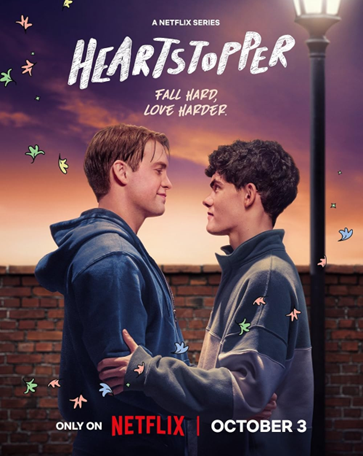
Where “Heated Rivalry” is raunchy and “spicy,” “Heartstopper” is cute and fluffy. “Heartstopper” is like if curling up under a blanket with a cup of tea was a show. Where Ilya and Shane started hooking up in episode one, throwing you straight into the show’s intense sexuality, “Heartstopper” has Nick and Charlie meet, accentuated by whimsical little animations of falling leaves. As I said, “Heartstopper” is like a cup of tea, but it’s not everyone’s cup of tea, so the differences I’m describing here might be why you like “Heated Rivalry” and you don’t like “Heartstopper” as much (if you’re a freak like that). So, putting that aside, let’s look at “Heartstopper” as a standalone piece of art.
As I mentioned, I love it. It’s well paced, the characters are lovable, you can feel the palpable chemistry and tension between the characters, and even with its simple premise, it manages to pull you in from episode one. “Heartstopper” is about Nick and Charlie, two British boys in high school. They meet and realize they might get along as friends. And then they realize they might like each other. Part of the show is leading up to this eventual relationship, but after that point, they have to deal with the gauntlet of coming out and making their relationship public. And that’s about it. That’s the show. And it works, and we loved it!
I cannot stress enough how much of a moment this show was when it premiered. I had friends telling me I had to watch it, and around when I caught on, everyone else did too. This time is still a distinct memory to me, probably one of the most fun weeks of my life. When the show began, I was a junior in high school. It was springtime, and this cultural obsession coincided with a school field trip. People I knew walked around the halls singing “Why am I Like This?” by Orla Gartland. My friends and I, having already seen it, binged the show together on the bus ride to and from our destination. It was hard not to enjoy the revelry. We shared our favorite moments, commiserated over characters we hated, and pointed out details others missed. A friend of mine swore it was her entire TikTok feed and said she bet the first video to come up when she opened the app would be about “Heartstopper.” She was right. I can’t think of a time when media has been more of a social and cultural moment for me, especially with our current lack of monoculture. There have been big releases, but really, no one cared about “Endgame” the way they did “Heartstopper.” And for once, it was gay people in the spotlight. How lovely it was to have this perfect piece of media that we could all share in, without the conversation being about how “controversial” the show is. That right there is what people mean when they say queer joy. I can’t say I’ve had the same experience when it comes to “Heated Rivalry,” but given the show’s intense popularity, which has reached heights likely higher than “Heartstopper,” I can see this creating a similar environment for viewers to enjoy.
Clearly, I’m biased, which is not great for a review. So I’ll just say, watch it, form your own opinions. And if you don’t like it, don’t tell me about it. But, in regard to the romantic connection elements I went on and on about before, “Heartstopper” delivers. The two get along as friends first, and Nick validates Charlie in his own strengths and brings him up when he feels insecure. One of my favorite lines in the show is when Nick’s mom, played by Olivia Coleman, says that Nick seems more himself around Charlie than any of his other friends. Perfect! That’s what I’m talking about, exactly what I’m looking for!
We get a coming out scene in this show as well, though you would be hard pressed to find a show with queer characters that didn’t have one. As coming out scenes go, this one is almost perfect. Again, it involves Olivia Coleman, need I say more? I will — she really sells it, getting teary eyed as Nick delivers his speech to her. It’s sweet and loving and not ruined by being absolutely led along like a dog on a leash by some asshole for ten years (I’m not over it).
As a queer TV show, “Heartstopper” essentially sets the standard for not only popularity but also writing in queer TV. In this tiny genre, it’s without a doubt a standout, cementing itself in the memories of its viewers, and bringing its soundtrack with it.
So that’s two queer TV shows down, and while my goal here is to mainly discuss TV, let’s take a detour here. If you’re familiar with this piece of media, you may have been a little confused when reading about parts of “Heated Rivalry.” I’m not alleging anything here, but let’s be real, “Heated Rivalry” is pretty damn similar to “Red, White, & Royal Blue.”
I prepared a list of similarities between the two:
- Forbidden romance between two young adult men.
- One is white and blonde, the other is non-white with dark hair, and one is gay while the other is bi.
- The two protagonists are from different countries.
- The relationship begins as a secret, and at a certain point, they get caught.
- The relationships also begin as a simple arrangement — they’re not dating, it’s just sex.
- There are long periods of time between the two being able to meet, made up for with frequent texting.
- There’s a secondary house visited by the couple in the summertime that serves as a turning point in the relationship.
- There’s a brief third-act breakup (can’t really fault them there, that’s just tropes).
- Both blonde guys have experienced the death of a parent.
- Both blonde guys are afraid to come out, partly for the sake of their families, and more so than their partners.
I could go on, but I’ll spare you. 10 is a good round number, and that seems like enough. I’m mainly talking about the TV show and movie, respectively, though it’s worth mentioning that “Red, White & Royal Blue” is also an adaptation (are you noticing a theme here?). In this case, I can speak on the book, because I have actually read it, actually more times than I would like to admit. Here’s another similarity I neglected to mention: they’re both from BookTok. I think that’s a pretty interesting detail in this whole analysis. For one thing, it’s likely a big reason why they share so many similarities. To clarify, I don’t think either writer wrote for BookTok as the target audience, nor do I think they were copying each other. As it turns out, they were released within two months of each other in 2019, when BookTok was just getting its start. That being said, BookTok tends to pick titles in the same vein for their specific tastes. If you were wondering, yes, “Red, White, & Royal Blue” could be described as “spicy,” but compared to other works on BookTok, it’s essentially Catholic.
Okay, enough clarifiers, what is it?
“Red, White, & Royal Blue” is about Henry, Prince of Wales, and Alex, the son of the president of the United States, who fall in love. See the issue there? It’s very Shakespearean. As discussed, it started as a book, but it got a movie adaptation on Prime Video in 2023.
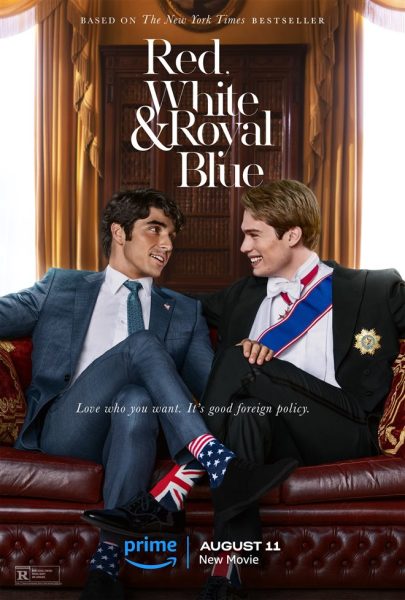
While the similarities between it and “Heated Rivalry” are genuinely striking, it makes the differences all the more glaring. Including in regard to my favorite issue, and why I ended up liking “Red, White, & Royal Blue” so much more than “Heated Rivalry” — it’s actually heartfelt. Whereas in “Heated Rivalry”, Ilya was cold and wanted this purely transactional relationship with Shane, Henry advocated for an unserious relationship, but actually had feelings from the start. Ilya strung Shane along, only accidentally acquiring feelings over time, because he’s an insensitive douche. Henry, on the other hand, actually wanted more out of a relationship with Alex, but couldn’t admit his feelings because of what it would mean for both of them. Here’s a direct line from the movie: “princes can’t be gay,” and yeah, pretty much. It’s palpable how much of a struggle this is for Henry throughout the book and the adaptation. It would mean blowing up his life, putting his family through strife, disappointing his people, and it was hardly his choice. Any decision making is largely controlled by his grandfather, whose main interest is their royal standing and reputation. Even if he did come out, he would only be forced back into the closet and away from Alex. In my opinion, this is more compelling because it has tangibly higher stakes than potentially, maybe harming your career as a hockey player.
This leads me to another big difference: Alex and Henry do get caught, and by more than just their parents. In the movie, when their relationship is revealed to the public, it’s actually about the third time they’ve been found out. They introduced the proverbial gun early on: this could blow up Henry’s life, potentially making him even more confined than he already is, and it could jeopardize Alex’s mom’s campaign in the already close presidential race. Then the gun goes off, so to speak, and the consequences are pretty bad. Alex and Henry are separated, their phones confiscated, not even allowed to speak to one another as both parties in control of the couple go into a full media blackout. Henry is terrified and unable to rely on Alex, who had become a support system for him over the course of their relationship. Stakes! Consequences! That’s how you write a story: introduce clear consequences for if things go wrong, make things go wrong, and put your characters through the consequences you established earlier. Put the gun on the mantle in act one, have it go off by act 3, and though Chekov didn’t actually say this part, it would be pretty disappointing if when the gun goes off, you just shoot the floor and everyone is fine.
I could go on and on about modern queer TV; in fact, there are many more examples of this genre I’ve yet to mention, like “Our Flag Means Death” (secretly referenced previously) and “Young Royals.” Let’s stop and think about that for a second. What do all of these shows have in common?
At this point, you may have noticed that all the examples are about male couples. Every show listed so far is about queer, male identifying characters. This brings up a pretty confounding and revealing question. So, let’s switch gears and discuss lesbian/sapphic tv.
…
I have no examples to give.
No, really, there are hardly any shows about queer women. Netflix had a teen drama about lesbian vampires, but swiftly canceled it. There’s “Killing Eve,” but that’s first and foremost a drama. The most famous show about lesbians, “The L Word,” ended in 2009, over 15 years ago. Here’s my question: Where are all the lesbians?
While there are queer women in shows, they’re hardly ever the focus. It seems gay men are able to take the spotlight far more often than queer women. Could this be because of inherent sexism? Are gay men seen as more palatable because they’re part of the patriarchy? In terms of social hierarchy, if white, cishet men are at the top, then gay men rank higher than gay women. Maybe people can get over male characters being gay, but a woman being queer is just too abhorrent in our conservative society (“I can excuse racism, but I draw the line at animal cruelty,” — Britta Perry, Community). This is just speculation on my part.
Especially considering how all of the works discussed previously are adaptations, the lack of interest in this demographic is especially confusing. In the fan spaces that championed “Heated Rivalry” and “Red, White, & Royal Blue,” there are plenty of popular books about queer women. Casey McQuiston, the author of “Red, White, & Royal Blue,” actually has 2 different novels about sapphic relationships, “One Last Stop” and “I Kissed Shara Wheeler,” both of which could potentially make great adaptations. There is no shortage of successful, well-written works about queer women to adapt. There is just as much of a market for shows about queer women as there is for men, and in my opinion, this is a tremendous missed opportunity for studios and streaming services. Network execs, hit me up! I have an entire collection of books you could adapt! The lesbians are starving!
In this limited but diverse expanse of queer TV centered around men, I yearn for the day when there is a show like Heartstopper or Heated Rivalry about queer women for me to pick apart.
Sources:
Amazon Prime. Red, White & Royal Blue Poster.
https://upload.wikimedia.org/wikipedia/en/3/3d/Red_white_and_royal_blue_film.png.
IMDB. Heartstopper Poster. https://www.imdb.com/title/tt10638036/ .
IMDB. Heated Rivalry Poster. https://www.imdb.com/title/tt35495073/.
Jussinoja, Kaija. “How a Vancouver Team and ‘Heated Rivalry’ Inspired a Hockey Player to Come out as Gay.” CTVNews, 25 Jan. 2026, https://www.ctvnews.ca/vancouver/article/how-a-vancouver-team-and-heated-rivalry-inspired-a-hockey-player-to-come-out-as-gay/.
McIntosh, Steven. “Heated Rivalry Author Rachel Reid Says TV Show’s Success Led to Help with Her Parkinson’s Disease.” BBC News, 31 Dec. 2025, https://www.bbc.com/news/articles/ce8gd0qvyrpo.
Tenor. Billy on The Street. https://tenor.com/view/lets-go-lesbians-gif-13879235
Wratten, Marcus. “From Heartstopper to Heated Rivalry: Why Queer Shows Are Still Defined by Their Sex Scenes.” PinkNews | Latest Lesbian, Gay, Bi and Trans News | LGBTQ+ News, 20 Jan. 2026, https://www.thepinknews.com/2026/01/20/heartstopper-heated-rivalry-pillion-why-queer-shows-still-defined-by-sex-scenes/.