
How Racism Physically Crippled Me
Stephanie Mojica
Racism is a large part of the reason that I cannot walk on my own anymore.
After having weight loss surgery in June 2022, I started vomiting uncontrollably. I had my surgery in Mexicali, Mexico, so I could not return to the doctors there. I went to a Los Angeles hospital. A doctor, whom I later found out was a recent medical school graduate, judged me by my last name, skin tone, and the fact that I had surgery in Mexico.
(I feel inclined to say that the hospital in Mexico had excellent care and was the cleanest I’d ever seen. This doctor is far from the only medical “professional” to assume that I went to a sketchy, dirty place to have surgery.)
“I hate it that you people expect the United States to take care of all of your problems,” the doctor said. “Just go back to Mexico.”
“I was born here,” I replied.
“But your parents weren’t.”
“Yes, they were.”
“What about your grandparents?”
“What does this have to do with the fact that I can’t stop throwing up?”
“Because this is Mexico’s problem, not mine. How did someone like you afford surgery? How did you really get the money?”
“I am a writer and got a loan. Besides, I have a law degree.”
“Now I know you’re mentally ill. People like you don’t have law degrees and can’t get loans. Just go back to Mexico.”
“Please stop saying that. That’s racist.”
“It’s the truth. Besides, you just have a case of buyer’s remorse.”
I wanted to scream at him, but knew it would only make things worse. I was terrified of him; I knew that my life was in his hands, and that his political views wanted me dead.
He told everyone at that hospital I was mentally ill and that I didn’t need hydration or nutrition via IVs. People pushed psychiatric medications, which I refused. My stay at that hospital led to me getting worse and worse. I told a chaplain how badly I was being treated, but my requests for a patient advocate kept getting denied.
Within a week of leaving that hospital, I could no longer walk, my eyes were rolling around uncontrollably, and I had maybe two days left to live.
The dehydration and nutrient deprivation led to brain scarring, muscle deconditioning, and three eye conditions (nystagmus, optic neuritis, and third nerve palsy).
Over three years after first encountering that doctor, I require a walker and sometimes a wheelchair. While my double vision is gone, I still do not see well. I use the 200% option on programs such as Microsoft Word. I cannot read most printed books or documents. I cannot handwrite a letter. I cannot complete printed forms without assistance.
Most of all, I no longer have faith in the medical or legal systems.
People ask me why I didn’t sue that doctor. I contacted 86 law firms. I had lawyers I’d done work for contact law firms. Because of the nature of medical malpractice laws in California, it would have been difficult to get justice for me. One law firm told me that my case “did not fit their economic model” because they might be able to get me “only” six figures.
Though people on both sides of the political spectrum tout California as a liberal state, what is liberal about allowing a racist doctor to alter people’s lives without even a blemish on his record?
What is liberal about creating a system where malpractice awards are capped, allowing doctors to do what they want with impunity?
Where is the justice for the innocent victims of an overcrowded system flooded with power imbalances?
I do not hear people talking about these issues on the news. While drug abuse, violence, and unhoused people are serious problems, so is the imbalance of power in the medical system.
People end up crippled, or even dead, when doctors inject their work with their personal biases … especially their political beliefs.
Almost every word that came out of that doctor’s mouth sounded like recycled FOX News reports from the last 10 years.
Still believe that racist beliefs and remarks are harmless?
Stephanie Mojica
Biography: Stephanie Mojica is a writer, editor, and teacher who works with college students in writing, business, sociology, and ethnic studies. She holds an honors LL.M. in International Human Rights Law and a Graduate Certificate in Religions of the World. She is finishing her second bachelor’s degree, an Honors B.S. in Sociology at Oregon State University, building on a first degree from Athabasca University. A disabled, first-generation student, she has spent years helping people tell true stories, understand power, and navigate school and work in real life, not just on paper.
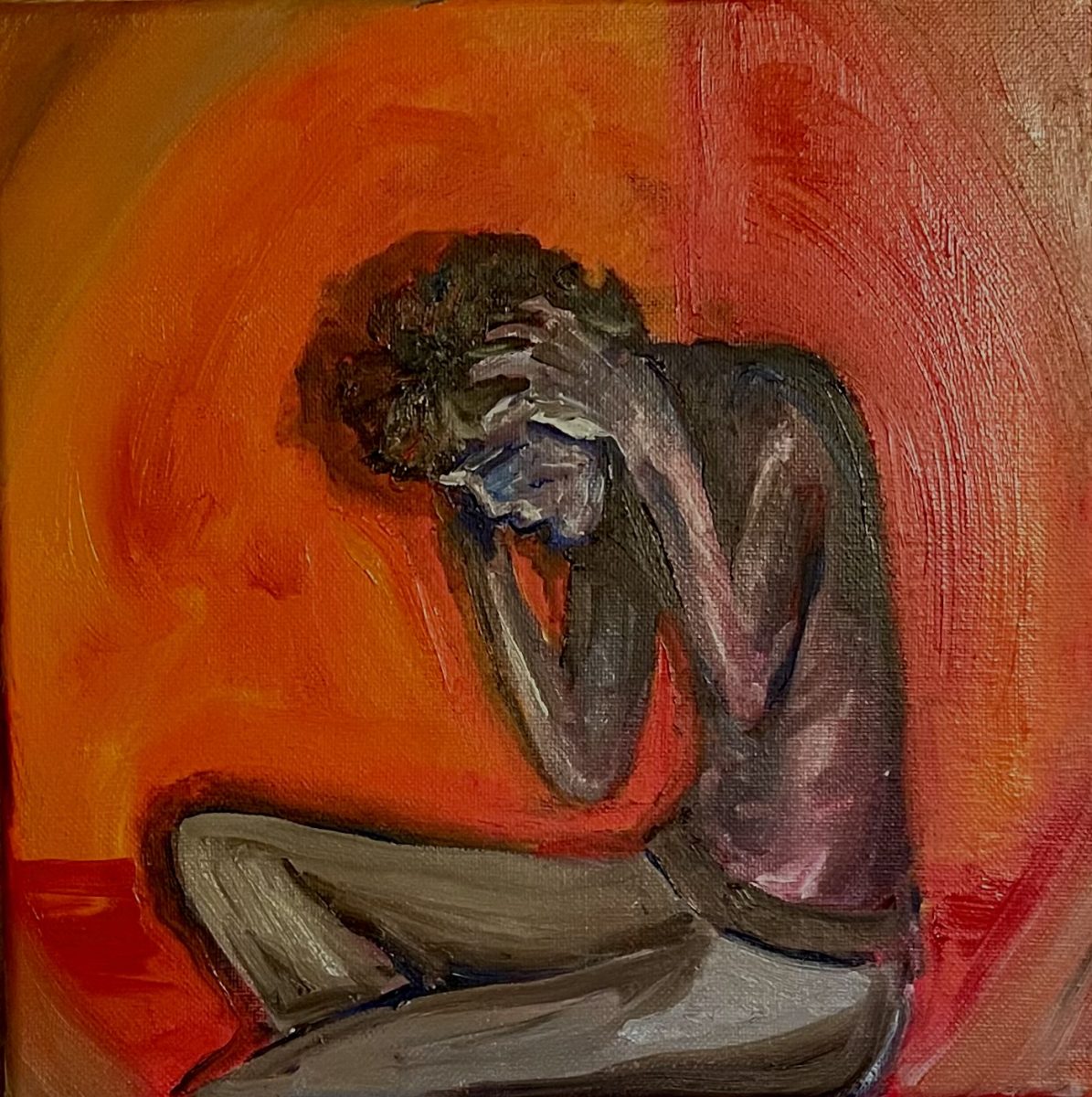
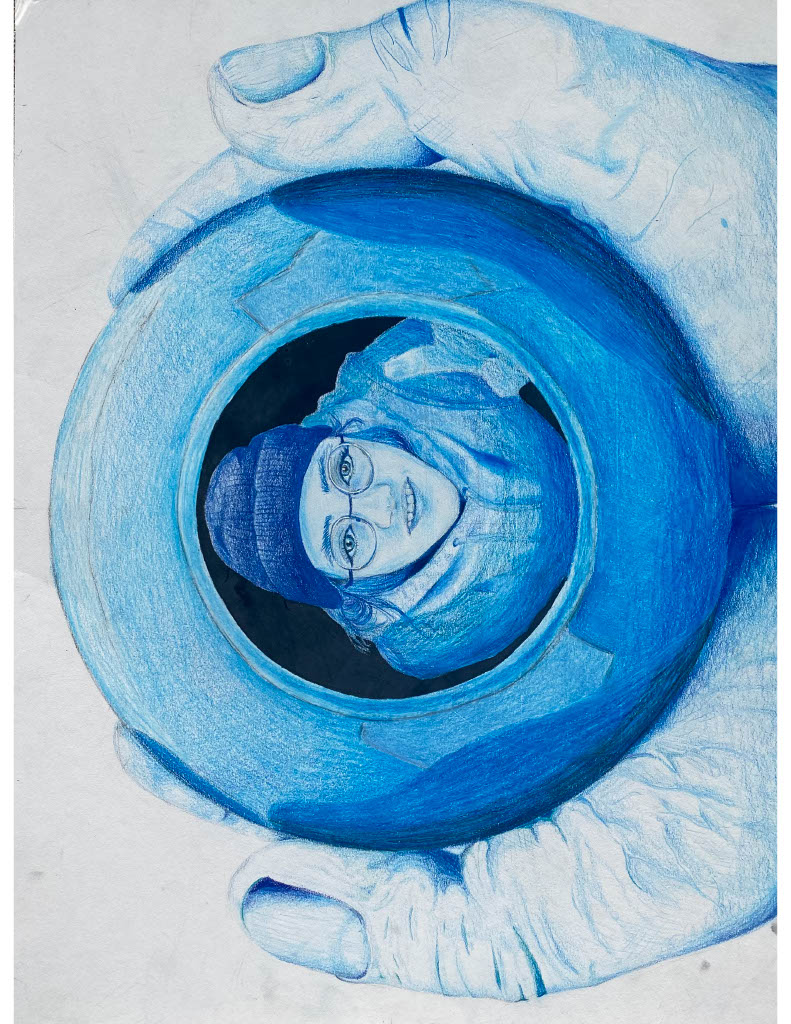
Artist Statement: “Visions” is not abstract for me. I lost most of my side vision and now live with 20/70 eyesight, a wheelchair, and a walker because a racist doctor ignored my pain. My old picture of the future is gone. Now “vision” means two things: what my damaged eyes can still see and the life I insist on building anyway. In meetings, I borrow other people’s eyes and hope. Together we imagine a world where disabled people of color are believed, treated, and safe.