Yes, Sir!
Lina Issa
Complaints are rotting on my tongue…
While the belt’s tongue is whipped across my body.
The belt is black, its leather tight,
yet blooms on me in pink take flight.
I need to raise you again,
In this home, no love gets in.
Your pain won’t earn a voice, a kin.
Oh home,
how much I’ve made you keep,
the rust of screams I hid so deep.
I swallowed echoes, every cry,
each muffled “ouch,”
each choked-out sigh.
I buried shame and words
beneath my sheets,
“yes, sir” – the only words I learned to repeat.
I rebelled with eyes that do not cry
With hands that slap each other,
clap, clap,
obey,
“Hit harder!” I have sinned, you say.
My sin is love,
and yours? So many..
One is to see a woman like me
as less than free.
What kind of woman’s worth your grace, anyways?
Now cup your palm across your face,
and howl.
With hearts that do not bend,
They’ll hear you, my love, and not pretend.
Let the complaint decay,
unwind,
let rot be all it leaves behind.
Let it blind
Let it sting
The curse of every silenced thing.
Lina Issa
Biography: Born and raised in Iraq, Lina began writing poetry at sixteen, shortly after losing her mother in a tragic accident. What started as a private refuge quickly became a lifelong act of healing. Through dark imagery, layered metaphors, and unflinching honesty, her work explores grief, identity, and the quiet rebellions of the soul. Her poems often approaches trauma indirectly through shadows, memories, and symbolic language yet always with a striking clarity. One reader described her writing as “carrying a raw intensity, refusing to shy away from hard truths… layered, stream-of-consciousness, and rich with complexity around pain and identity. Confessional, almost incantation-like quality that feels deliberate and haunting. Obviously very lyrical.” Today, her voice continues to grow from the intersection of survival and imagination, offering readers both an intimate confession and an invitation to reflect on their own hidden wounds.
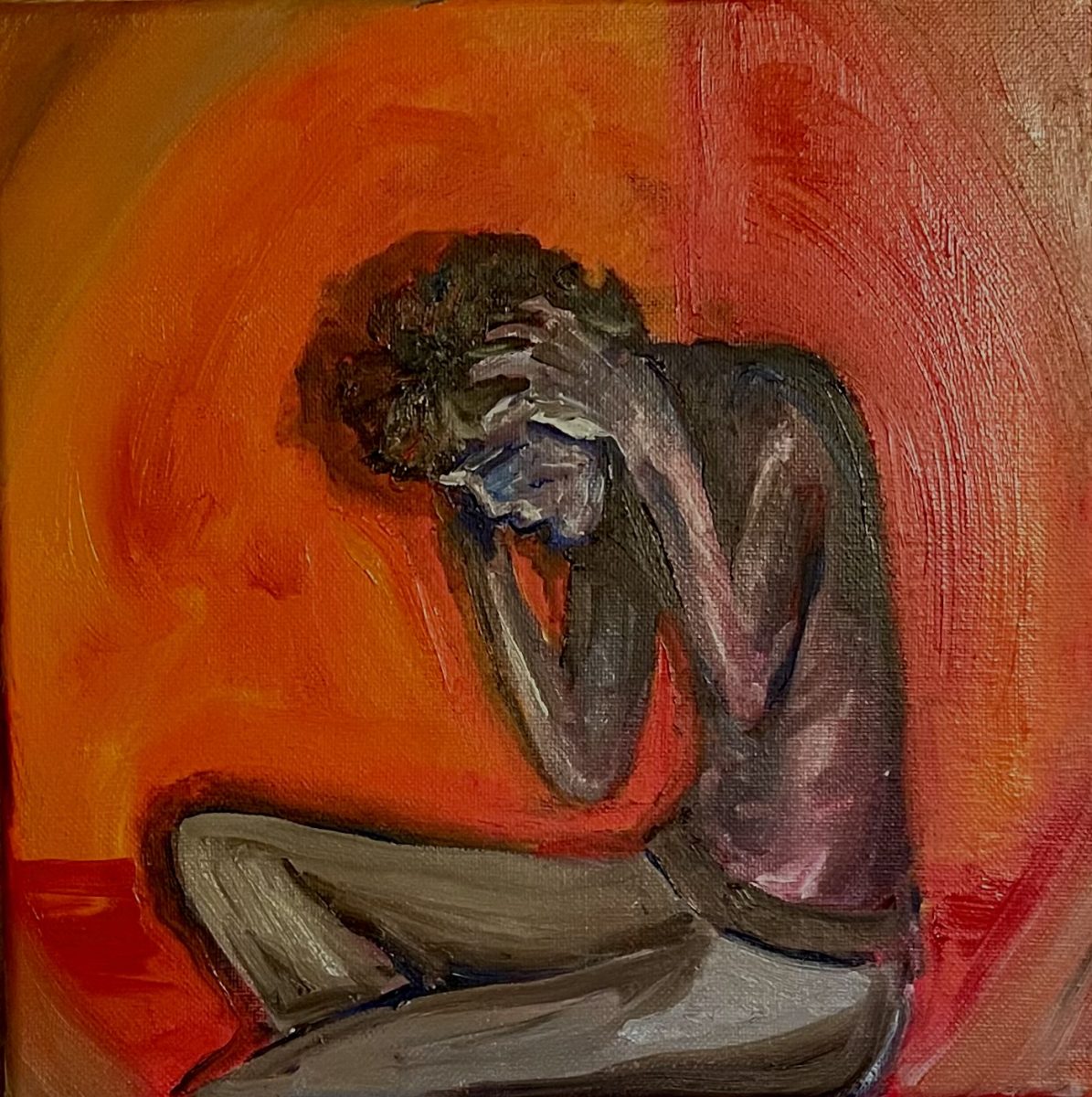
Artist Statement: This poem talks indirectly about being physically abused by a parent. It is from the memory of a childhood shaped by fear, obedience, and the bodily language of survival. It reflects on the unspoken violence that becomes part of a home, and the ways a girl learns to swallow their own voice in order to endure. Writing this piece was not an act of remembering alone it was an act of rewriting the trauma and taking ownership of it. Here is where it relates to the theme “Vision”, For me the poem is a revisit to an old trauma, remembering and approaching it with a new vision, a freeing one! a one where I own my story. Also The theme “Visions” appears through the contrast between what was seen and what was hidden; the marks on the skin versus the silence in the mouth, the obedience seen by others versus the rebellion held secretly inside.